top of page
Samsara
Project Gallery
Project Overview
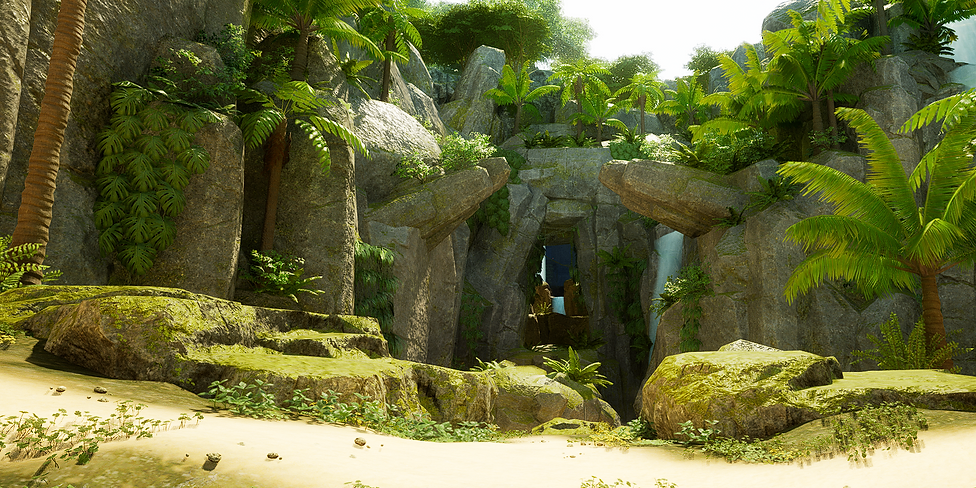
Samsara is an action-adventure RPG based on Buddhist mythology with a soul-like twist. It engages the players to meditate on their philosophy of death to help them understand their meaning in life. My involvement in this project was using the existing game base to develop a large-scale level known as "Jambudvipa". This involved top down sketches, greybox implementation, playtesting and iterating the layout. Please note, I was not involved in the set dressing of this level.

Project Details
- Made in Unreal Engine 5.
- 3 months development.
- Large-Scale Level.
- Perforce used for version control.
- Progress tracked through Hansoft.
- Sprint Planning & Retrospective documented on Miro.
- Cross-Discipline team of four developers.
- Linear Level
-
Level Design
References
Gathering references played a crucial role in helping shape the creative direction of "Jambudvipa" taking into account cultural aspects such as Buddhist architecture. This segment of development allowed me to understand what the director wanted me as a designer to deliver and find potential design constraints.

Level Design
Beach Greybox
During the greybox phase I focused heavily on the main playable area ensuring there was no ways of escaping or collision issues. Taking into account vistas to help the player distinguish orientation through landmarks. The most noticeable landmark being the temple on top of the mountain seen throughout most areas of the level, which gave the player a clear end goal. Iteration was prominent throughout this phase based on playtesting feedback as seen through changes from the first and second pass.
First Pass:

Second Pass:

Forest Area Block Out:

Playtesting
Playtesting was done daily during throughout development and documented on Miro. Gaining new perspective helped test for both usability and functionality of the level, this was particularly useful during grey box implementation. During first and second pass, this helped identify weaker spaces allowing iteration which improved things such as spatial awareness, POV and lines of sight. During polish, and specifications for final output playtesting was great when accessing enemy and loot to fine-tune placement.

Design Choices
Perspective
When I developed this layout for Jambudvipa, I withheld information from the player to invoke anger. The player is lead into temple ruins which seems to be a dead end. A chest can be seen in the far right section of the layout which to be accessed requires the player to switch perspective. The switch in perspective reveals a new pathway for the player, intending to invoke joy as they have found loot, and a new pathway.

Landmarks
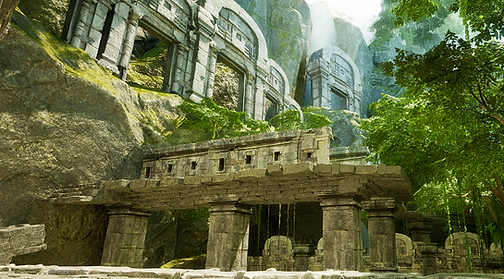
Landmarks are present in various vistas and points in the level to help with player orientation. In particular, the waterfall is one of the tallest points in the level, acting as a great landmark which the player will naturally gravitate towards. Supporting this the ruins against the cliff edge act as a leading line towards the waterfall in numerous vistas.
Exploration
When designing the layout I added branching pathways. This was intended to encourage exploration. Often branching pathways lead to dead ends, however the player is rewarded with hidden loot they would not have accessed without exploring. For this visual example the player most likely knows they need to go up due to landmark positioning, but if they explore the lower area they are rewarded without loot chests.

Level Fly Over
bottom of page